Cute Online. Cruel Offline.

The Cost of Cute in the Age of Social Media

Kaitlyn Kim
Visual Communication VI

Graphic Design Program
Arizona State University

INTRODUCTION

Social media has changed the way people interact with animals. Platforms such as Instagram, TikTok, and YouTube are filled with videos of otters holding hands, monkeys wearing clothes, and slow lorises being tickled by their owners. These videos often appear harmless or entertaining, presenting wild animals as cute companions rather than wildlife.

However, many of these viral moments hide a more complicated reality. Exotic animals featured in social media content are frequently taken from the wild, bred in captivity for entertainment, or kept in environments that cannot meet their natural needs. While audiences may only see a few seconds of adorable footage, the conditions behind the camera can involve stress, confinement, and exploitation.


This project investigates the relationship between social media culture and the exotic pet trade. Through research, design exploration, and exhibition development, it examines how viral animal content influences public perception and contributes to the demand for exotic pets.

Over the course of my senior year in the Graphic Design program at Arizona State University, I explored how design can communicate complex issues in ways that are engaging, informative, and visually compelling. By combining research, visual storytelling, and exhibition design, this project aims to reveal the hidden consequences behind seemingly harmless online content and encourage viewers to reconsider how wildlife is represented in digital spaces.
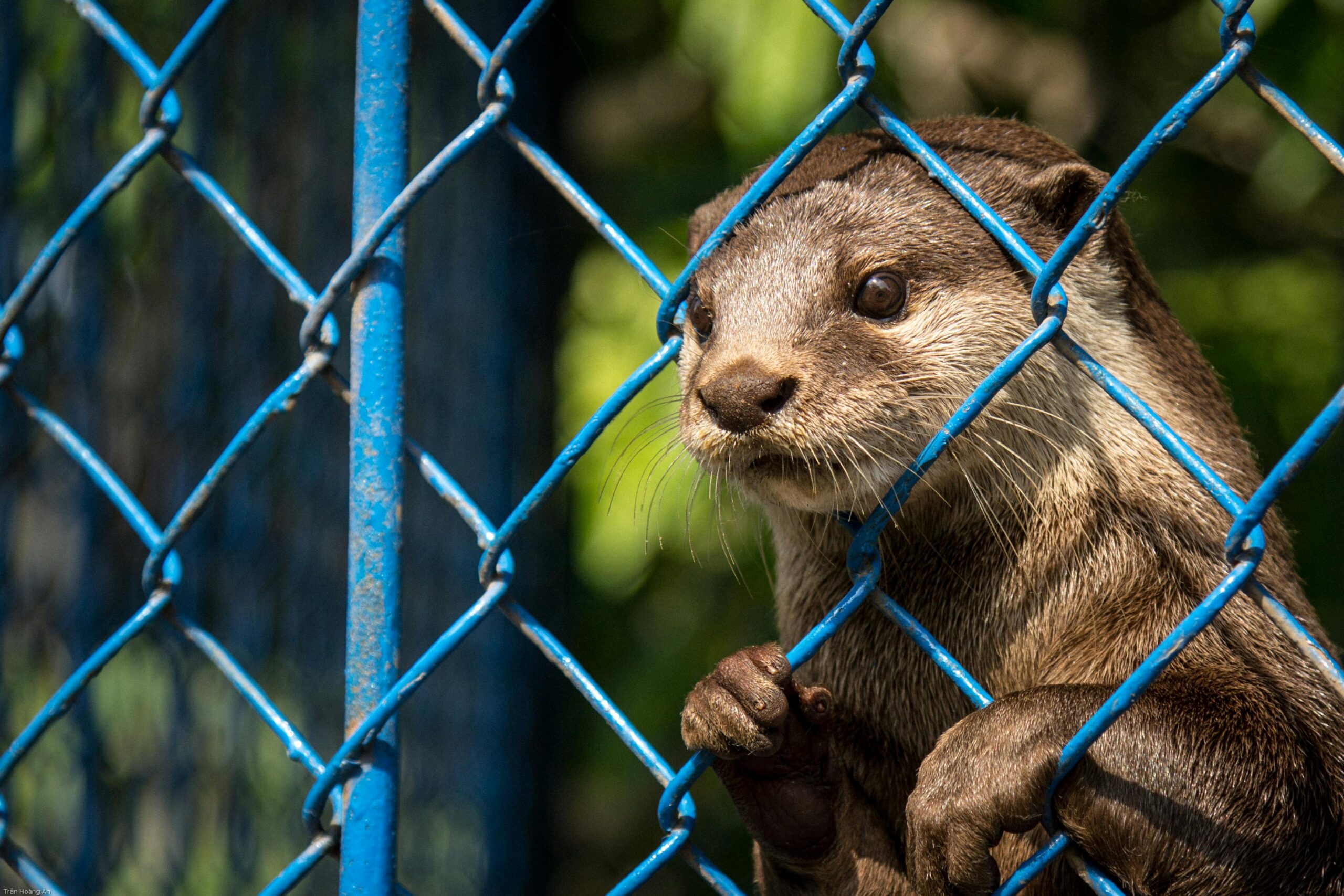
ILLUSION OF CUTE

Social media often presents exotic animals as cute companions, but these images rarely show the full story.

So cute! 🦦

Reality

Many otters shown online are taken from the wild as babies and sold into the exotic pet trade. Viral videos contribute to the growing demand for them as pets.

Aww its ticklish!

Reality

The slow loris is raising its hands as a sign of being threatened and trying to protect itself. They have a venomous oil underneath their arms for a protective defense mechanism. Slow lorises used in viral videos often have their teeth removed so they cannot bite handlers.

Capybaras are the chillest
animals ever.🌿


Reality

Capybaras are wild animals that require large spaces, water habitats, and social groups to survive and thrive. When kept as pets for social media content, they are often isolated, confined to small environments, and unable to exhibit natural behaviors.

RESEARCH

Understanding how social media influences the exotic pet trade and public perception of wildlife.

Viral Animal Content

Videos of exotic animals are widely shared across social media platforms. These posts often present wild animals as affectionate, playful, or suitable companions for humans. When audiences repeatedly see animals behaving calmly around people, it can create the impression that these animals are safe and appropriate pets.

However, these videos rarely show the full context of captivity. Many exotic animals featured online have complex environmental, social, and dietary needs that cannot be met in typical domestic environments.

The Exotic Pet Trade

The demand for exotic animals as pets is closely linked to online visibility. As certain species gain popularity through viral videos, interest in owning these animals increases. This demand can contribute to wildlife trafficking, captive breeding operations, and environments where animals are kept primarily for entertainment or profit.

Many exotic animals sold as pets are taken from the wild as infants, separated from their mothers, and transported through illegal trade networks.

Social Media and Perception

Social media algorithms promote content that receives high engagement. Videos featuring animals behaving in unusual or human-like ways often attract millions of views. Because audiences are exposed to these images repeatedly, perceptions of wildlife can shift. Naturally, wild animals may begin to appear domesticated or harmless.

This shift in perception can normalize the idea of keeping exotic animals as pets or using them as entertainment.

EXPLORATORY WORK

Throughout the year, a series of exploratory projects helped develop the ideas behind this exhibition. These projects investigated how social media shapes perceptions of wildlife and how design can communicate the hidden realities behind viral animal content.

Senior Exhibition Fundraiser Poster

This poster was designed to promote a fundraising event supporting the Graphic Design Senior Exhibition for the Class of 2026. The event included an auction and poster sales intended to help raise funds for the final exhibition.

The design needed to capture attention, communicate the purpose of the fundraiser, and encourage participation from the community. By promoting the auction and poster sale, the project helped generate support for the graduating class as they prepared to present their work in the senior exhibition.

Committee Collaboration

Working within the committee involved collaborating closely with classmates, coordinating campaigns, and ensuring the “Unfold” theme was clearly communicated across all promotional materials. This experience highlighted the importance of teamwork, organization, and strategic communication in producing a successful event that supported the Class of 2026 exhibition.

For the Senior Exhibition fundraiser, the winning poster titled Unfold became the centerpiece of the auction and poster show. To organize the event, the senior class was divided into committees, each responsible for a different aspect of the fundraiser. I served on the Social Media and Marketing Committee, where I helped promote the auction and generate excitement around the exhibition.

Senior Exhibition Social Issue Poster

This poster was created to promote the Graphic Design Senior Exhibition and highlight the range of topics explored by the graduating class. The exhibition includes projects addressing a variety of social issues as well as work connected to the NASA Psyche mission and Mars program.

The goal of the poster was to showcase the class as a whole while representing Arizona State University’s design program. By presenting both social impact projects and science-related collaborations, the design communicates the educational scope of the exhibition and the diverse interests of the graduating designers.

Social Issue Presentation

The social issue topic presentation introduced the research behind the project, focusing on social media, animal perception, weak law enforcement, animal exploitation, and the exotic pet trade. Presenting the research helped organize the key ideas that would later shape the exhibition concept.

This stage allowed the project to move from broad research into a clearer design direction by identifying the most important themes to communicate visually.

Social Issue Clock

The Social Issue Clock visualizes the constant circulation of animal content on social media. Just as a clock continuously moves, posts featuring exotic or wild animals appear in feeds around the world at all hours, shaping public perception in real time.

This project illustrates how repeated exposure to curated “cute” animal content can normalize the idea of keeping exotic pets or using wildlife for entertainment. By representing these patterns as a clock, the design makes the abstract idea of constant online repetition tangible, showing how social media contributes to misconceptions about animals and their welfare.